Morgen Frames
How interaction exploration became the foundation
for Morgen's leading product positioning.
Exploration
At Spring 2023 I explored out of my own interest how could
calendar tools help us be more intentional with how we spend our time.
We usually have a list of todos, and we react to incoming
tasks by asking ourselves when will I do it?
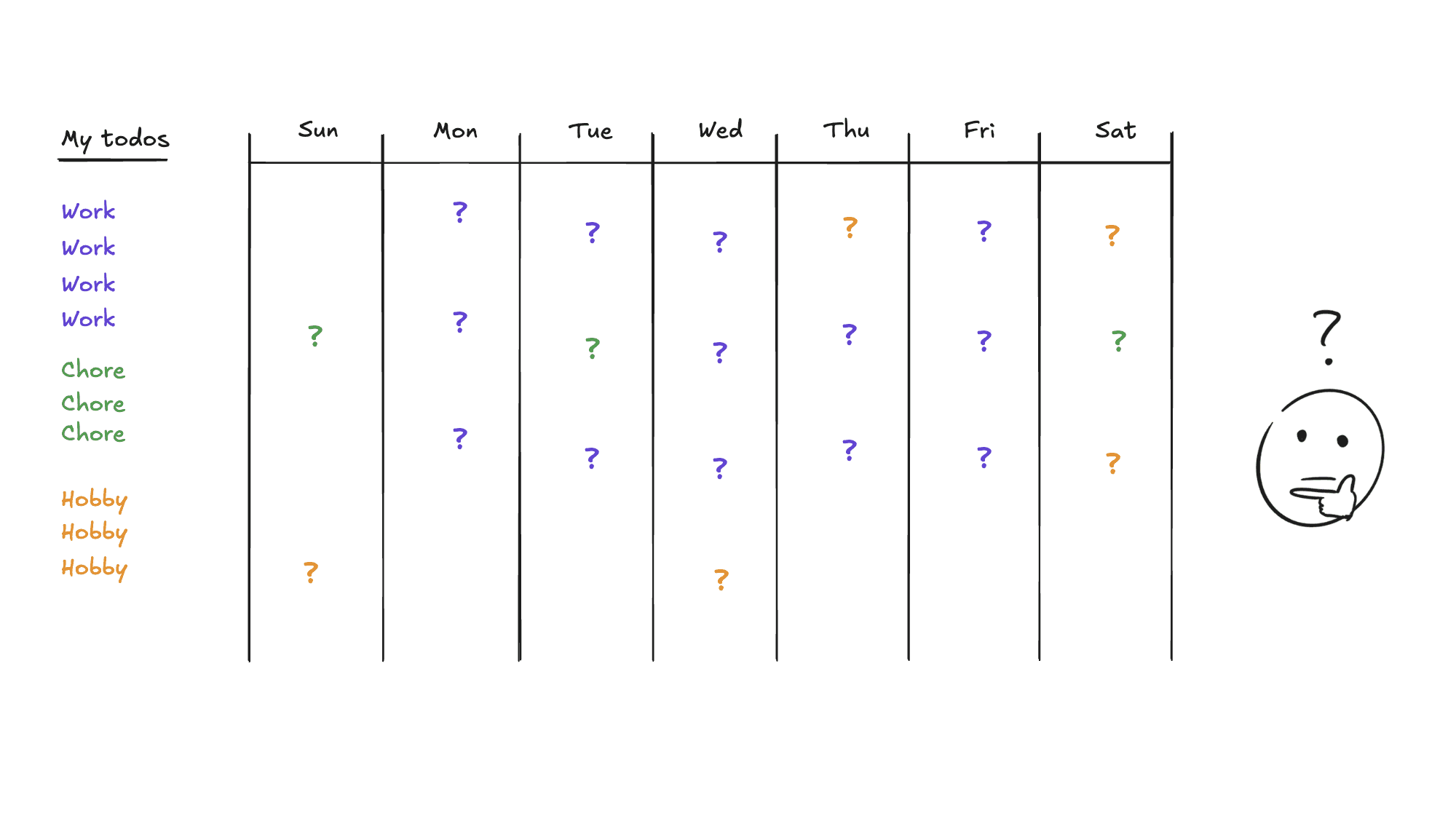
I wanted to create an opposite flow which starts by asking ourselves
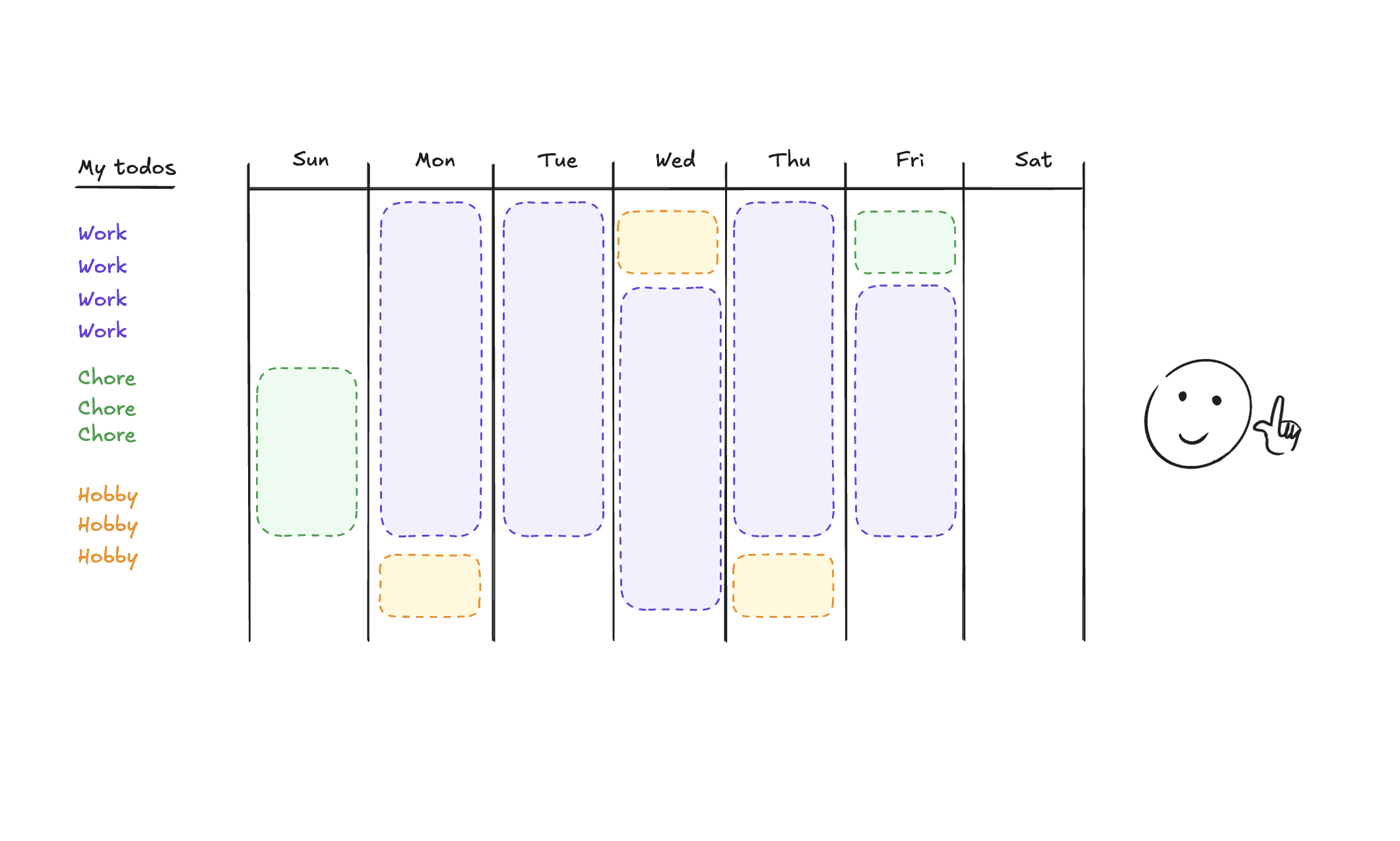
how would we want to spend our time?
Then we "fill" these containers with tasks.
This forces us to prioritize one task over another, but gives the clarity and ownership over our time.
This concept became "Frames";
I frame this intention on to my calendar, adjusting it if needed.
Then I fit my todos inside my intentional frames.
Prototyping
Once the concept of Frames was clear, I prototyped how this interaction could work in an actual calendar tool.
Framing and adjusting my intention for this week.
Populating frames with my todos.
Prototype to product
I shared this concept and prototype with Morgen's CEO, David, it clicked, and we booked a meeting to discuss working together.
At the time, AI-powered planning tools didn’t exist yet, so populating your frames required manual editing which was great for maximizing intentionality, but didn't fit people's need for low mental effort for time planning.
With AI, Frames became the interaction link.
It lets you design your ideal ordinary week.
Morgen's AI planner takes this information and creates daily to weekly plans, recommending when to work on which tasks.
Impact
Morgen's AI planner became its leading positioning and
is used for demos to acquire new paid customers.